Exterior problem
|
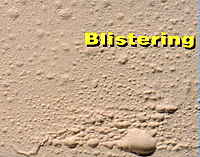 |
| Blistering: Blistering is the formation of bubbles resulting from localized loss of adhesion and lifting of the paint film from the underlying surface. Possible Causes:
Solution: First, determine whether or not the blisters go all the way down to the substrate. If they go down to the substrate, the problem may be due to moisture coming from inside. Take steps to remove the source of moisture, if possible. Repair loose caulk and consider installing vents or exhaust fans. If the building has wood siding, install siding vents in areas where blistering has occurred. Remove blisters by scraping and sanding, prime any areas where bare wood shows, and repaint. If the blisters do not go all the way to the substrate, the problem is probably not related to moisture coming from behind. Rather, the blisters are likely from painting a warm surface in direct sunlight or exposing the paint film to excessive moisture. In any case, sand, scrape and then prime any exposed bare wood. Coat with a top quality acrylic latex exterior paint. |